
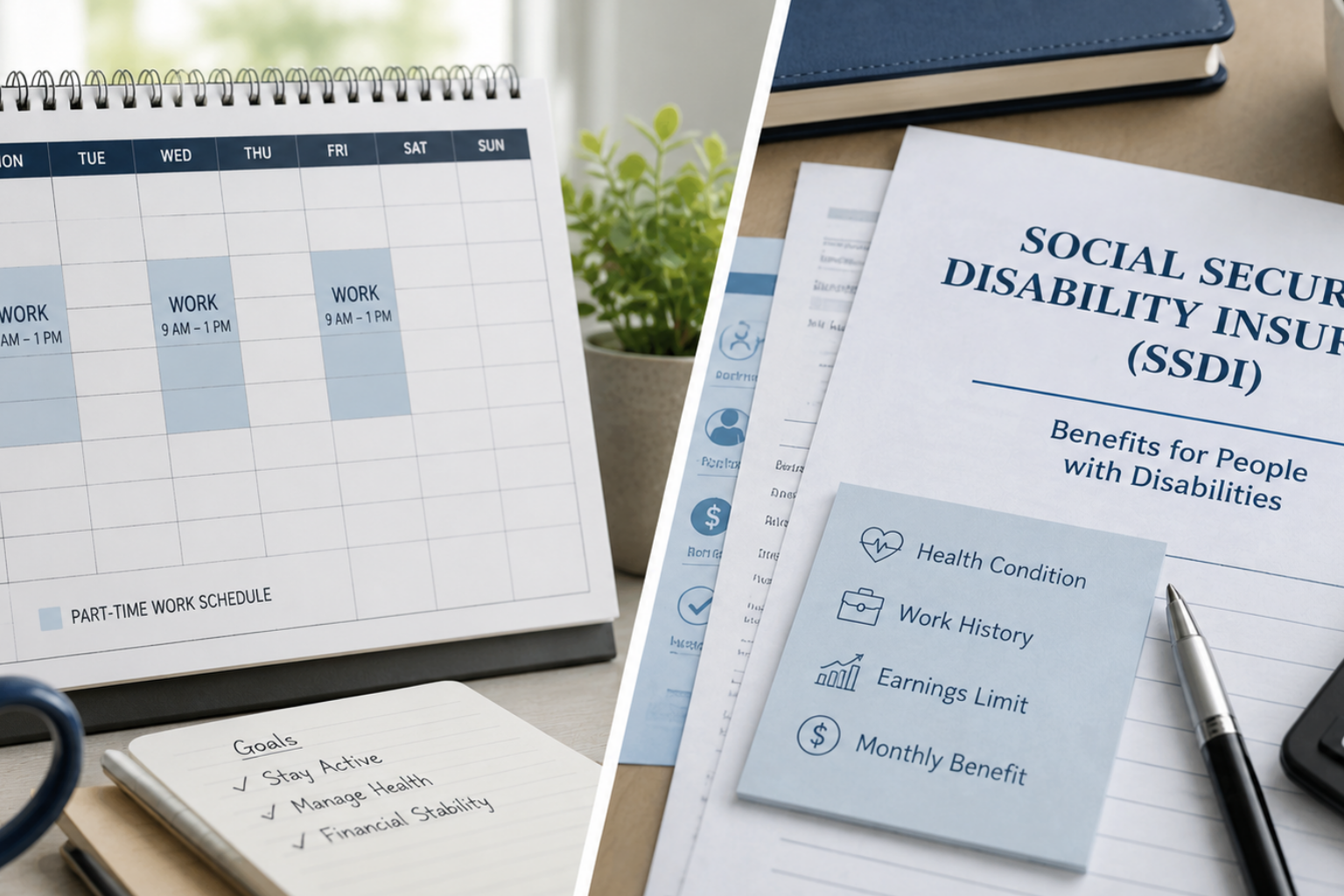
Yes, it may be possible to qualify for SSDI while working part-time. But part-time work can affect how your situation is evaluated, especially if your income or job duties suggest you are still able to perform regular full-time work.
The key issue is usually not just whether you are working. It is whether your current work activity is limited enough to fit with the claim that your condition prevents substantial work.
Part-Time Work Does Not Automatically Rule Out SSDI
Many people assume that any work means they cannot qualify for SSDI. That is not always true.
In some situations, a person may still be a good fit for SSDI if:
- Their work hours are limited
- Their income stays below allowed levels
- Their job duties are reduced
- Their condition still prevents full-time work
Part-time work does not automatically end the conversation, but it does raise important questions about whether the work activity matches the limitations being claimed.
Why Income Matters
Income is one of the biggest factors when someone is working part-time and considering SSDI.
Even when hours are limited, earnings can still matter because:
- Higher income may suggest the ability to perform substantial work
- Income above allowed levels may weaken eligibility
- Regular earnings can create questions about how limited the person really is
This is why two people both working part-time may not have the same outcome. The amount earned can make a major difference.
Job Duties Matter Too
It is not just about the paycheck. The kind of work you are doing also matters.
Questions that often come up include:
- Are you doing physically demanding work?
- Are you working in a role that requires concentration, stamina, or attendance?
- Are your duties similar to the work you say you can no longer do?
- Does your job suggest you could still function in a regular work setting?
A person who works only a few hours a week in a highly limited role may look very different from someone doing more demanding tasks on a steady schedule.
Why Part-Time Work Can Weaken a Claim
Part-time work can create problems when it appears inconsistent with the limitations being claimed.
Some common issues include:
- Earning too much
- Working too many hours
- Performing tasks that suggest full-time work may still be possible
- Reporting severe limitations while continuing to do similar job duties
- Having medical records that do not match the level of work activity
Even a legitimate condition can be harder to support if the work activity raises questions.
When Part-Time Work May Still Fit an SSDI Claim
Part-time work may still fit an SSDI claim when the overall situation shows that the person cannot maintain substantial, full-time employment.
That may be more likely when:
- Hours are very limited
- Income stays low
- The work is inconsistent or hard to sustain
- Special accommodations are needed
- Symptoms interfere with attendance, pace, or performance
- Medical records support ongoing functional limitations
The more clearly the records show that the person is struggling despite limited work, the easier it may be to understand why full-time work is not realistic.
Medical Records Become Even More Important
When someone is still working part-time, medical documentation often becomes even more important.
Strong records may help explain:
- Why the person can only work limited hours
- Why symptoms still prevent full-time work
- What physical or mental limitations exist
- Why the current work does not mean the person can function in a normal full-time job
Without strong medical evidence, part-time work may be harder to reconcile with an SSDI claim.
Common Examples of Work Issues That Come Up
Some examples of part-time work situations that may affect a claim include:
- Working reduced hours but still doing physically demanding tasks
- Working from home with accommodations that would not exist in other jobs
- Missing shifts frequently because of symptoms
- Earning low income but doing duties that appear inconsistent with the claim
- Trying to keep working but struggling to sustain it
Each of these situations can look different depending on the records, income, and overall work pattern.
Why Reviewing Work Activity Early Matters
Many people are unsure whether their current part-time work helps or hurts their situation. Reviewing it early can help answer questions like:
- Is the income too high?
- Do the job duties create a problem?
- Does the work match the limitations in the medical records?
- Does the situation still support the idea that full-time work is no longer possible?
That kind of early review can help avoid moving forward with the wrong expectations.
Part-Time Work and SSDI Are Not Always a Simple Yes or No
Whether part-time work affects SSDI often depends on the full picture, including:
- Income
- Hours worked
- Type of job
- Consistency of attendance
- Physical or mental demands
- Medical documentation
- Whether the condition is expected to last at least 12 months
This is why part-time work cases often need a closer look than cases where someone has already stopped working entirely.
Check Whether Your Part-Time Work May Affect SSDI Eligibility
Answer a few quick questions about your current work, income, medical treatment, and limitations to see whether your situation may still be a strong fit for SSDI.