
SSDI Resources and Guides
This resource center provides detailed guides to help you understand SSDI and make informed decisions.
Featured SSDI Topics
SSDI Eligibility
Learn who qualifies for Social Security Disability benefits, common eligibility requirements, and how medical and work history can affect your claim.
SSDI Application Process
Understand the steps involved in filing an SSDI claim, what documents you may need, and what to expect during the application process.
SSDI Appeals & Denials
Discover what to do if your claim is denied, how the appeals process works, and strategies that may help strengthen your case.
Latest SSDI Insights
Stay informed with regularly updated educational content covering SSDI news, legal updates, application tips, and disability claim guidance.

Denied SSDI Benefits? What to Do Before the 60-Day Appeal Deadline
Receiving a denial of Social Security Disability Insurance benefits can feel discouraging—especially after spending months gathering records,...

How Long Does It Take to Get Approved for SSDI?
Waiting for a Social Security Disability Insurance decision can be one of the most stressful parts of the disability claims process. For many...
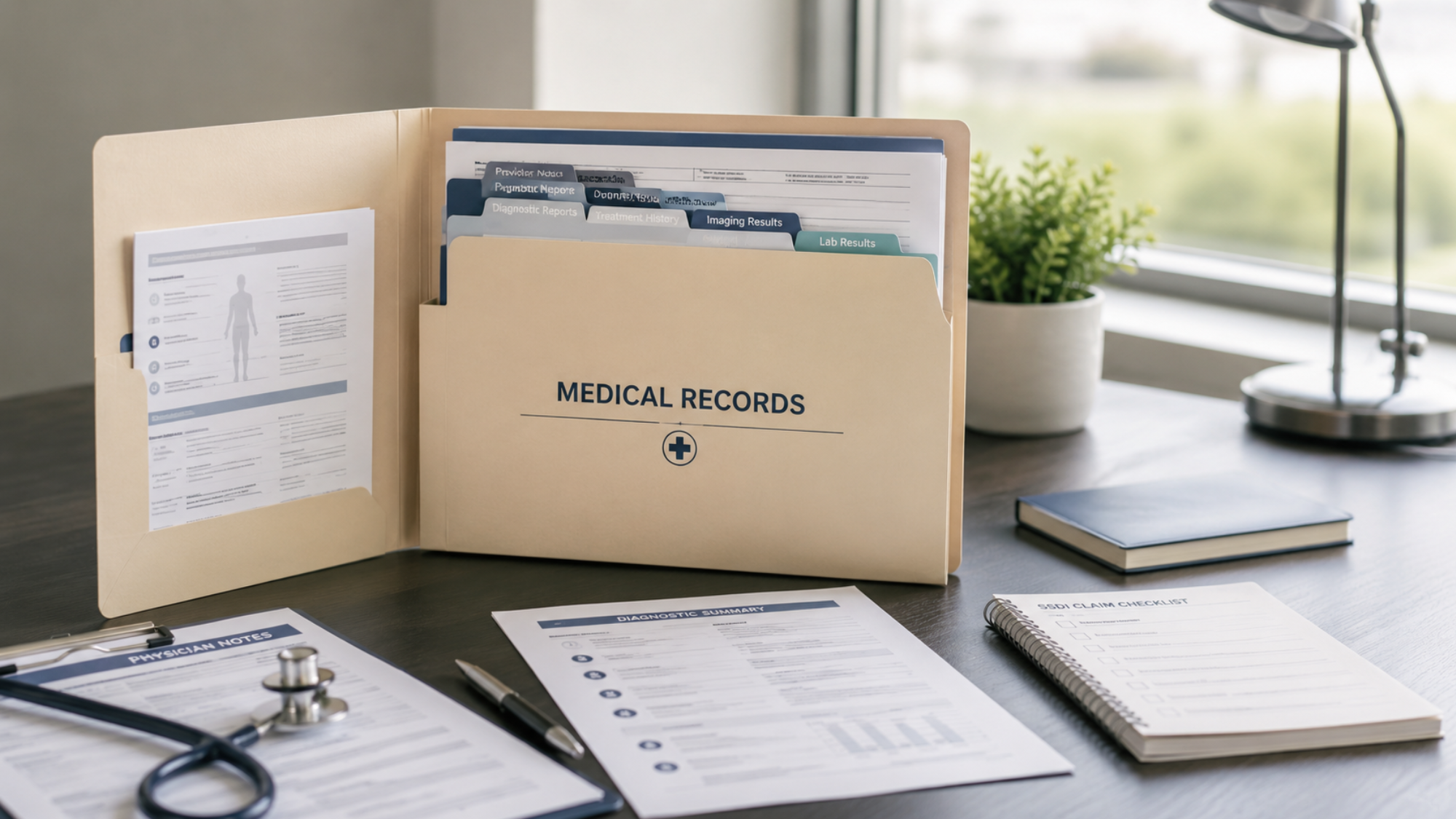
How Medical Evidence Can Make or Break Your SSDI Claim
When you apply for Social Security Disability Insurance, or SSDI, your medical evidence can be the difference between a strong claim and a denial....
Need Help With an SSDI Claim?
If you have questions about your disability claim or appeal, our team is here to help you understand your options and next steps.
FAQ
What is SSDI?
Social Security Disability Insurance (SSDI) is a federal benefits program that provides financial assistance to individuals who are unable to work because of a qualifying disability.
Who qualifies for SSDI benefits?
Eligibility for SSDI depends on several factors, including your medical condition, work history, and whether your disability prevents you from performing substantial work activity.
Who can apply for SSDI?
Individuals who have a qualifying disability and sufficient work credits may be eligible to apply for SSDI benefits.
What documents are usually needed for SSDI?
Applications often require medical records, employment history, treatment information, and personal identification documents.
Check If You May Qualify for SSDI
Answer a few questions about your work history, medical treatment, and current condition to find out whether your situation may meet SSDI requirements.