
See If You May Qualify
for SSDI Benefits
Get clear, straightforward guidance to understand Social Security
Disability eligibility, your work history requirements, and what steps
to take next.
If a medical condition is preventing you from working, you may
qualify for monthly disability benefits. Understanding whether you
meet the requirements is the first and most important step.
What is Social Security Disability Claim?
Social Security Disability Insurance (SSDI) is a federal program that provides monthly benefits to individuals who are unable to work due to a serious medical condition. If you’ve worked and paid into Social Security, you may qualify for benefits if your disability prevents you from maintaining consistent employment.
SSDI is designed to support individuals who meet both medical and work history requirements.
Need help understanding whether you qualify? Explore our SSDI resources or contact us for guidance on your next steps.
START WITH THE RIGHT NEXT STEP
See If You Qualify
Review eligibility requirements
and find out if you may qualify.

Apply for SSDI
Learn how to start your application and avoid common mistakes.
Appeal a Denial
Understand why claims get denied and how to appeal your decision.

HOW THE SSDI PROCESS WORKS
The SSDI process involves more than simply submitting an application. It requires demonstrating, through documentation and evidence, that you meet strict federal requirements.
- Determine Eligibility
- Prepare Your Claim
- Submit Your Application
- Review and Decision
QUICK QUALIFICATION CHECK
Do You Meet These Basic SSDI Criteria?
Many successful SSDI applicants share similar characteristics.
You may be a strong candidate if:
- Are between 50 and 63
- Expect your condition to keep you from working for at least 12 months
- Received treatment from a doctor, hospital, or clinic within the past year
- Worked full-time within the past 5 years
- Are not currently receiving Social Security Disability benefits
- Are not represented by another attorney or advocate
WHAT DETERMINES ELIGIBILITY
Work History and Credits
To qualify for SSDI, you must have worked long enough and recently enough to earn sufficient work credits. These credits are based on your earnings and contributions to Social Security.
Medical Evidence and Treatment
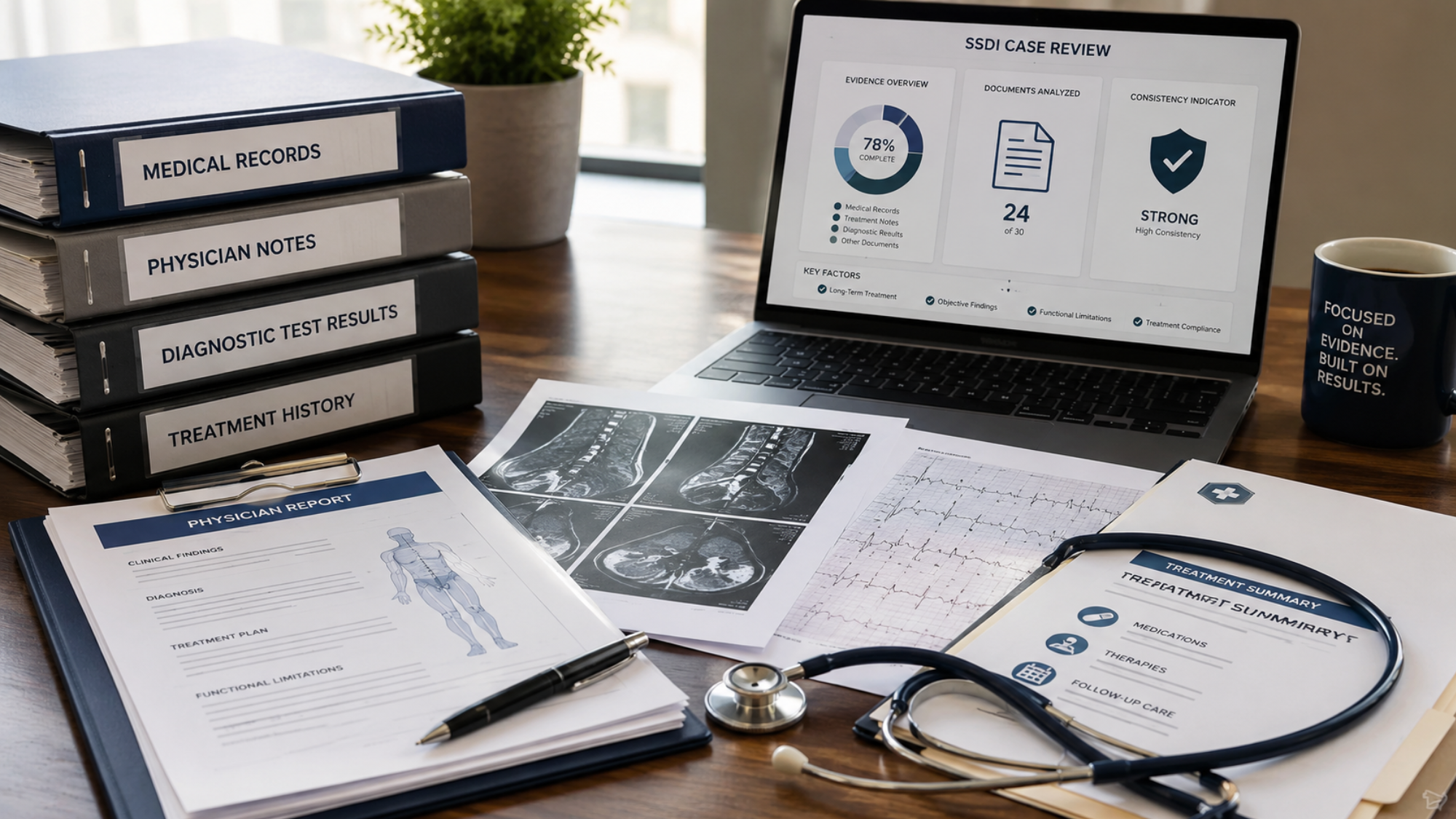
You must provide medical documentation showing that your condition is severe, ongoing, and limits your ability to work. Regular treatment plays a key role in proving your case.
Inability to Perform Substantial Work
The Social Security Administration evaluates whether your condition prevents you from performing substantial gainful activity, including your past work or other types of work.
Disabilities We Commonly Help With
- Chronic back and spinal conditions
- Depression and other mental health disorders
- Anxiety disorders
- Arthritis and joint conditions
- Cancer and ongoing treatment-related limitations
Even if your condition is not listed here, you may still qualify if it significantly limits your ability to perform work activities.
SSDI RESOURCES & INSIGHTS
Explore helpful guides and answers to common SSDI questions.

Can You Work While Applying for SSDI?
Applying for Social Security Disability Insurance can be stressful, especially for claimants who still need income while waiting for a decision. A common question is: Can you work while applying for SSDI? The answer is yes, but with serious limitations....
SSDI Benefits Explained: Who Qualifies and How the Process Works
Social Security Disability Insurance, often called SSDI, can be confusing for people who are dealing with a serious medical condition and wondering whether financial support may be available. The program is designed for people whose disability stops or limits their...

Why SSDI Claims Get Denied Even When the Condition Is Serious
Many people assume that a serious diagnosis should automatically lead to SSDI approval. But that is often not how disability claims work. A person may have a very real and severe condition and still be denied if the records do not clearly show how that condition...
SSDI Frequently Asked Questions
Who qualifies for SSDI benefits?
To qualify, you must have sufficient work credits, a medically documented condition, and be unable to perform substantial work for at least 12 months.
Can I work and still apply for SSDI?
In some cases, yes. However, your income must remain below the SSA’s substantial gainful activity limit.
How do work credits affect SSDI eligibility?
Work credits determine whether you have contributed enough to Social Security to qualify for benefits.
Why is medical treatment so important for SSDI?
Consistent medical treatment helps prove that your condition is ongoing and severe enough to prevent work.
What happens if my SSDI claim is denied?
You have the right to appeal your denial. Many claims are approved at later stages with stronger evidence.
How long does the SSDI process take?
Initial decisions usually take 3–6 months, but appeals can extend the process significantly.
Take the First Step Toward SSDI Benefits
If you are unable to work due to a medical condition, finding out whether you may qualify is the most important step you can take.